




About Wacky Steps
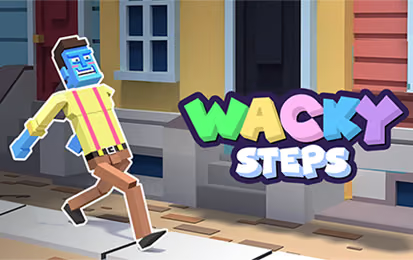
Wacky Steps makes walking a sequence of deliberate choices. Holding extends the stride, but a longer reach can also destroy the character’s balance. Cracks, traffic, and other hazards interrupt an otherwise steady route. Coins and checkpoints add reasons to move forward, while the immediate challenge remains placing the next foot without collapsing.
How to Play Wacky Steps
- Begin with a short hold to see how the next step develops.
- Release before the stride overextends.
- Look at the next crack or hazard before starting another step.
- Use the next attempt to adjust a single step that ended the run.
Controls & Timing
A long step is useful only when its landing is useful. Look beyond the immediate gap to the surface where the foot will come down. When a run fails, distinguish a foot placed on a hazard from a loss of balance caused by holding too long.
Controls
| Input | Action |
|---|---|
| Click and hold | Extend the stride |
| Release | Complete the step; follow the displayed walking prompts |
High Score Tips
- Build a rhythm with small steps before increasing the distance covered by each hold.
- Read one landing surface ahead so a safe stride does not leave the next step over a crack.
- Treat a coin as optional when reaching it changes an otherwise stable foot placement.
- After a checkpoint, look at the new section before continuing the rhythm you used to reach it.
Key Features
- Hold-based stride control
- Ragdoll balance and terrain hazards
- Coins, checkpoints, and varied settings
Frequently Asked Questions
Why do long steps fail?
Extending too far can upset the walker’s balance even before a hazard is reached.
Should I use identical holds all the time?
A steady baseline helps, but the next safe landing can require a different stride.