


About Drunken Duel
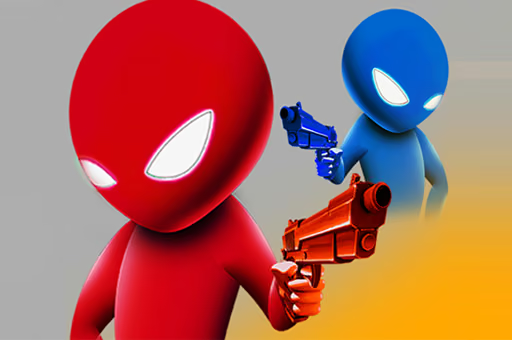
Drunken Duel is an arcade match built around stickman movement and ragdoll-style reactions. Each player uses a simple input, but the fighter's changing balance can make the outcome of an exchange unpredictable. Challenge a friend on the same keyboard or play against the computer.
The useful habit is to observe what happens after the input, not only the moment you press it. Your character may be facing a different direction or standing in a different position afterward. Give the fighter time to settle, then decide whether the next action fits the new situation.
How to Play Drunken Duel
Choose a match mode, identify your fighter, and time your control around the opponent and your character's motion.
- Select a solo or two-player match from the available options.
- Identify which side and control belong to you.
- Watch the opponent's position and the movement of your own stickman.
- Press your assigned key and follow the result of the action.
- Recover your position and adapt to the next exchange.
Controls & Timing
One input changes the fighter's position
Player 1 controls the left stickman with W; Player 2 uses the up arrow for the right stickman. Watch the result of each input before repeating it, especially when the fighter is already off balance.
The opponent changes the timing
A familiar input rhythm may be easy for another player to anticipate. Notice whether the opponent acts immediately or waits, then choose a moment based on the current distance and positions.
Controls
| Input | Action | When to use |
|---|---|---|
| W | Control the left stickman | Player 1's input during a match. |
| Up arrow | Control the right stickman | Player 2's input in a shared match. |
High Score Tips
- Identify your side first. Check which stickman and key belong to you before the opening exchange.
- Watch the fighter after pressing. Momentum can leave the character in a different position; use that result to decide when to act again.
- Avoid a fixed rhythm. In a shared match, vary your timing in response to the opponent instead of repeating a predictable sequence.
- Recover from an awkward movement. When your fighter is off balance, read the position before adding another input that could make recovery harder.
- Compare a single timing adjustment. If the same exchange keeps going poorly, change the moment you press while keeping the rest of your approach familiar.
Key Features
- Stickman fighters: Each side controls a simple character.
- Ragdoll motion: Balance and momentum affect the exchange.
- Compact controls: Each player uses one listed keyboard input.
- Computer opponent: Play a solo match against the computer.
- Shared two-player play: Two players use separate keys.
Frequently Asked Questions
Which key controls my fighter?
Use W for the left stickman and the up arrow for the right stickman.
Can two people play together?
Yes. Choose a shared match and make sure both players know their assigned key.
Why does the character feel difficult to control?
Unsteady ragdoll movement is part of the game's presentation. Observe the result of an input and allow for recovery before deciding when to act again.
How should I respond to a different opponent?
Watch the opponent's timing and current position. An approach that worked against the computer or another player may need a different rhythm in the next match.